Our politicians are also capable of doing good work
Filed in General Interest, March 23, 2008, 11:28 am by Sukumar TweetProlog: I am taking a bit of a break from the History series because i need to do some more research. Myself, NK Sreedhar and Priya Raju are actually working on the Farmer/Sproat/Witzel paper to try and disprove it. It appears Parpola has not done a good job of disproving the paper.
Myself, Priya Raju and a group of about 20 volunteers have adopted a Corporation School near our office. We volunteer our time to teach the students computing, english speaking etc. The Program Manager for this CSR initiative in our company is Archana Raghuram. For non-Indian readers, a Corporation School is the equivalent of a Public School in the USA. But the similarities stop there. In India, most children attending Corporation Schools come from disadvantaged backgrounds.
The first few sessions with the school, that we have completed so far, have been very illuminating about the challenges primary/secondary schools face in India. This school is part of a school system that targets 192 million children in 1.1 million habitations. This is just to give you a sense for the staggering size and complexity of anything in India due to our sheer population.
We found the children very enthusiastic about the program and surprisingly the teachers also are very supportive. I happened to spend about an hour with the Head Master (Principal) of the school one-on-one and i was blown away by the sense of community involvement he displayed. He told me a few things that made me revise my view of India’s politicians and I am sure you will agree that is not likely to be an everyday occurrence in India.
Sarva Siksha Abhiyaan(SSA) [Universal Primary Education]
The first thing he said was that about 5-6 years ago during the AB Vajpayee BJP Government days, he was made part of the ambitious Sarva Siksha Abhiyaan program. Till then he was a regular 9-5 teacher and after being a part of the program he is now a reformed man who constantly thinks about the community issues he is dealing with and that education has to be seen in the context of the community his school’s students are from. For instance, most students of this school come from disadvantaged backrounds – they are children of daily wage construction workers, menial workers, petty shop workers etc. Most of the parents are themselves illiterate making these students, first generation entrants to the school system. Female students face significant hurdles due to being forced out of the school system in the 9th grade due to societal pressures to get them married early or to make them assist their parents in their jobs etc.
As he explained the situation, it was all becoming painfully clear. He took me outside his office to show a wall which had the goals of the SSA program:
- All children in school, Education Guarantee Centre, Alternate School, ‘ Back-to-School’ camp by 2003;
-
All children complete five years of primary schooling by 2007
-
All children complete eight years of elementary schooling by 2010
-
Focus on elementary education of satisfactory quality with emphasis on education for life
-
Bridge all gender and social category gaps at primary stage by 2007 and at elementary education level by 2010
-
Universal retention by 2010
You can see just from these goals the nature of the challenge faced by India. I went through the website for this program to further understand the program. Interestingly, the headmaster said that when the Congress government took over, they decided to continue this program. It is typical in India for succeeding governments to repeal/rewind most of the work done by the previous government. The fact that the Congress government did not do that, told me that, we are faced with a set of politicians who are comitted to making a dent on this garguantuan problem cutting across party lines. This is the human face of India’s politicians that is often not seen by us, when all we hear about is how corrupt everyone is.
Noon Meal Program
As the headmaster started explaining i asked a number of questions. One of the programs that has been bothering me is the Noon Meal Scheme (or the Mid-Day Meals Program for School children). I always thought that this was yet another way for politicians to line up their pockets and giving poor quality food to the children. This is the perception i had even though i had read reports in the Western media about how good this program is for retaining children in school.
The headmaster then told me how the noon meal scheme was created and that blew my mind away – a true example of path-breaking creativity:
In the 1960s, K. Kamaraj, the then Chief Minister (similar to USA’s Governor of a state), was visiting a village and he happened to see a few young kids tending to cows. When he asked them why they were not in school – the boys asked Kamaraj if he will give food if they went to school. Within a few weeks, Kamaraj started what is the world’s first noon-meal program for grades 1 through 5 and later in the 1980s, MG Ramachandran, another Chief Minister, expanded the program to cover 6-12.
The headmaster said that the noon-meal program is one of the principal reasons why students stay back in school. He said that in the villages it has created a massive dent on school dropouts making dropouts almost non-existent.
Overall, SSA and the Noon Meal Programs are the kind of bold and ambitious initiatives we need in India to make poverty non-existent.
Way to go India.
The Honor Among Families
Filed in General Interest, March 10, 2008, 7:29 am by Sukumar TweetHere is NK Sreedhar’s 2nd post. This time it is a real life account, with the names changed, of course. Please be generous with your comments to encourage him. – Sukumar
—-
It was a brisk spring morning. The streets were painted yellow by the Cassia fistula tree in full bloom. You can smell the new season in the air. My friend Vivek and I were riding a bike on our way to class this morning. We were in our 2nd year in college and in a few weeks it will be our final semester exams. Needless to say, that wasn’t the thought on our minds.
As we rode through the entrance gate, the ever unhappy Somu, the security guard, greeted us with his stoic face. “College closed today, sir”, he said. What, now! We couldn’t be having a strike! “Why bother! It’s not like we attend many classes other than the majors”, Vivek suggested. Still, the thrill of ‘bunking’ classes is lost when college is closed.
As we got near our department, we saw all our friends huddled around and chatting in a low hushed voice. “What’s up, who died?” was the first sarcastic remark that came out of my mouth. I was only in my 2nd year and they were teaching ‘etiquette’, ‘how not to be a smart ass’, ‘avoiding foot in mouth’ etc. only in the 3rd year. There was widespread shock in all my friends’ faces. Raj said, “Angel passed away this morning”. I knew then what a blow to the head felt like. Angel is one of the sweetest girls in our class. She is down to earth, highly pious and a quiet girl, who kept to herself most of the time. Being in the seat right behind her for most of 2nd year, I picked on her a few times and she was always calm and collected. She always said, “Christ is with me. I don’t get annoyed”.
There were so many questions swirling in my mind. How did this happen? Why her? She was young and had so much to achieve. I was frustrated with how fragile life was. I wasn’t going to cry in front of my friends, but I was close to it multiple times. As we drove to her house, Raj pulled me aside and said “the news is, she committed suicide”. “Suicide! Why? She didn’t seem unhappy when we left her yesterday”, was all I could think about. You think you know someone well, but, looks like we didn’t know her at all. My mind was totally blank. This is the 2nd death to a classmate and I was too young to remember the first one (3rd grade).
Angel’s house was inside the church. Her parents served the church and lived in a house inside. As we tried to get in, most of our department was already there outside. We were told that there wasn’t going to be an open coffin as Angel sustained severe damage when she burnt herself down. Some of us were really furious. Why didn’t she talk to any of us if she had problems! We would have helped her.
After the funeral, we were all there in a friend’s house. All of us wanted to talk to Vicky, Angel’s best friend. If something was bothering Angel, Vicky would have known about it. Vicky was crying inconsolably. When she recovered, in between bouts of crying, Vicky explained to us that Angel was in love with Ed. Ed was in his first year of becoming a ‘brother’ in the same church. He was going to give it all up to marry Angel. Angel was going to tell her parents the previous night and get their approval. Apparently, Angel was scared about how the church and her parents would take it.
It was very hard to imagine the ever smiling, calm Angel going through this and not telling anyone. Did her parents not approve of Ed, was she worried about what others would think, was she worried about Ed being pulled from priesthood – we could only contemplate without knowing what happened.
If all this was all shocking and overwhelming, nothing prepared us for what was to come two days later. The police were investigating into Angel’s death. Apparently, Ed lodged a complaint that there was some foul play. They exhumed her body and found that Angel was pregnant. They also found that she was force-fed kerosene. Angel’s parents were arrested for killing her by burning her alive.
We were unable to understand why one’s own parents would do this! Why would someone kill their own daughter and grand child? – Just because she was pregnant! Was their image in society more important to them than their own flesh and blood? Why was it acceptable to be called a murderer rather than facing society for an out-of-wedlock child?
Many of the parents felt that it was better to go down for murder than to face their daughter bring ill-repute to the family name. As Angel says “Christ is with her”.
The Real History of India – Part 8: Parpola Lecture disproves Farmer/Witzel/Sproat
Filed in General Interest, March 7, 2008, 12:13 pm by Sukumar TweetUpdated again March 16, 2008: Varnam.org includes this post in their History Carnival. Thanks a lot Varnam.org. We are honored.
—
Updated again March 9, 2008: Steve Farmer sent me an email and was kind enough to explain to me why my post was moderated out. I accepted his explanation. But i told Steve that attacking the person and attacking the argument are 2 different things and that untill the comments that attack me are removed from his group forum, i will keep my retort up over here.
Updated March 9, 2008: This post is being discussed by Witzel, Farmer and others. I have got some new labels from this group of highly accomplished academicians – I am now a Nationalist (read Hindutvavadi) and a Parpola Admirer/Deifier. My response to their discussion on their forum doesn’t seem to get posted possibly because they moderate it. I also didn’y store my post by mistake. I am rewriting my post on that forum here and hence some of the words may have changed but the essence is the same:
1. I am the author of the post all of you are discussing. I object to the nationalist label you assigned to me because that is a proxy for unscientific people. I am a proud Indian National, as proud of my nationality as much as you all are about yours. If you call me a Nationalist, i assume you will also carry that same label with the same negative connotations against your names as well. For the record, I am of the view that Aryans came from outside India and Aryanized the local people (its not Aryan Invasion). You will understand my position if you read post #6 of this series.
2. I find it amusing that you all picked one line in the report about Homer’s epics being in Linear B for your discussion and even setting bounties to be hunted for it. That might have been entirely my mistake in representing what Parpola said. Let me point out to you that this entire Parpola rebuttal disproves the Witzel/Farmer/Sproat beyond reasonable doubt. If you still want to stand by your research, please publish your rebuttal in an open forum like you have done with your original paper. Where is the need for obtaining a personal discussion with Parpola?
3. Witzel, i generally respect and admire your research and your arguments. I have read most of your papers available on the public Internet and also the spats you had with Frawley in the pages of the Hindu newspaper. But this paper of yours that tries to prove that IVC was illiterate is one that i don’t agree with at all. Now Parpola has disproved it.
4. I seem to have gotten another label – Parpola Admirer/Deifier. I think Parpola is extraordinary and I am an admirer, yes. He is a man who has spent 4 decades of his life on Indology in a time when what goes by the name of Indology is arguments around Aryan Invasion Theory. I believe that IVC was a great civilization and in some ways better than or at atleast at a par with Sumer and Egypt. IVC deserves its rightful place in the history of humankind. You can dismiss that as my axe to grind. Maybe. But you can easily make me abandon my position with scientific arguments that is accepted as valid by the general Indology community. Just setting bounty money on irrelevant parts of the argument doesn’t behove of an accomplished academic community that all of you represent.
I rest my case.
—–
Updated March 8, 2008: NK Sreedhar found the link to the powerpoint Parpola used. He also found a more verbose PDF version where Parpola explains his rebuttal. Thanks a lot Sreedhar.
—-
Prolog:
After covering the Aryan Invasion Theory debate, we get back to the IVC. Saturday, Feb 16, 2008 was a great day in my life. Thanks to Archana Raghuram’s tip off, myself and Priya Raju got to attend a lecture by Asko Parpola at the Indus Research Centre [Roja Muthiah Reference Library] on saturday from 10.30 AM to 12.30 PM. We had reached the venue at 10 am, so that there would be no scope for missing even one word of the great master. I also managed to get his autograph. After about 15 min, we saw Iravatham Mahadevan coming and sitting in the front seat. I got his autograph as well – he signed his name in the Indus Script! If you are really interested in understanding the IVC people and their script, this lecture notes may be a critically important one to read. I have tried my best to capture everything Parpola said. If you find this lecture difficult to grasp, you may want to first orient yourself to his thoughts by reading this recent interview of Parpola which appeared in the Hindu newspaper.
Welcome Address by V.C. Kulandaiswamy, former Vice Chancellor of Anna University, who chaired the meeting:
This center has been setup in Jan 2007 and is one of the newest centers for Indus Research. It is now operating under Iravatham Mahadevan’s tutelage. We have today Asko Parpola, Professor Emeritus of Indology from Univ of Helsinki today. There have been several Indus researchers but AP is unique. He has dedicated almost 4 decades, one could say, his entire life to Indus Research [Wow!]. Not just him, his brother, his wife and his daughter are all engaged in Indus Research. No other person on the planet can claim this sort of dedication to the cause of deciphering Indus – it is a rather unenviable task because many people think the script is undecipherable.
He got started as student of Sama Vedic rituals [is an expert in Sanskrit, Vedas and Upanishads] and later started working on the IVC Script. He started collecting material for his research in the 1960s and has accumulated a monumental amount of material which he has now published in 2 volumes the Indus Corpus [need the exact name] in 1987 and 1991. 2 more volumes are being worked upon.
Asko Parpola
I presented this paper in July 2007 at a Stanford Univ conference criticizing the Farmer/Witzel/Sproat paper that claimed that IVC was illiterate. I also presented this at a Japanese Conference. I am going to present the same paper with some more material to all of you today. This paper is not yet available in the public domain.
For the record, let me start by saying that the IVC script is a logo-syllabic script. I will present their arguments one by one and offer my rebuttal [starting with a “But” – My addition] for each one of them and then conclude with some more thoughts.
1. There are too few symbols compared to Chinese and other such pictographic scripts. At the same time there are signs repeated in the same seal.
But,
a. they agree themselves in the paper that this point alone is not enough to prove that it is not a script.
b. Kimmo Koskienien, a colleague of mine sent an email to Sproat “does this mean you can’t prove or disprove” – Sproat replied “Yes”.
c. Shows the Narmer Inscription from Egypt showing how Cat Fish [Nr] + Awl [Mr] = Narmer.
d. Shows the famous Cleopatra and Ptolemy Cartouches which have repeating signs within a single cartouche. So repeating signs alone don’t prove or disprove anything.
2. Text is too short and there are too many rare signs (or very infrequently used signs)
But,
a. Indus Seals have an average of 5 signs and that is more than sufficient to convey many things. Given the logo-syllabic nature and the fact these seals may represent religious rituals or trade transactions, we cannot expect long sentences.
b. Shows 2 Akkadian Seals from 2200 BC that shows “Adda the Scribe” and another showing a short poem about King of Akkad.
c. Not all signs are short – shows 2 seals having 14 signs each.
c. Sometimes even a single sign can convey a concept and shows the man + 2 concentric circles + tiger seal.
d. Compound signs that are composed of 2 or more individual signs are present. For examples shows the compound sign having a man carrying bow+arrow and also man and bow+arrow as individual signs.
3. Too many singletons
But,
a. Only 25% of the signs occur only once and even that may change with more seal excavations.
b. All logo-syllabic scripts have many rare signs like Chinese for example.
4. No “random-looking” sign repetitions within any text.
But,
a. points to the ptolemy & cleopatra cartouches with sign repetitions highlighted to show what a “random-looking” sign repitition is.
b. Indus also has this pattern and it occurs in the very same “bar seals” that they talk about. they missed it.
c. Shows many examples of sign repititions using seals M-682 A, M-682a, M-682 a bis; M-634-A, 93; K-10A, K-10a;
Also shows 1 sign repeated in 2 places in an 8-sign bar seal.
d. Then shows an example of a repeating sign that has 2 signs signifying “eye” and says that is “kann” [See in tamil] and “Kaan” [To See in Tamil] . So the repetition must be “KannKaani” meaning “Supervise”. [This is f***ing brilliant.]
5. “Lost” long texts never existed. We need text > 50 signs.
But,
a. Maybe we need more excavations.
b. Rongo Rongo signs from Easter Island have greater than 50 signs. Is it writing?
c. Cites Possehl 2002, Cotton was cultivated and it was a main export of IVC. Yet we find only a few fibers of cotton attached to some vessels. Maybe they wrote text on persihable material like cotton.
d. Neachos, Greek, said that thickly woven cloth was being used for writing in India, he said it in 325 BC
e. Sanskrit sources also mention this.
f. Asoka was the first one to write in stone which is dated to 250 BC.
g. Panini mentions the word Lipi meaning script in 400-350BC so he must have known about writing.
h. There are evidences in Central Asia from 2nd cent A.D talking about palm leaf and birch bark manuscripts.
So they might have written their long texts in such perishable material which might have been lost.
6. No cursive variants found, so no possiblity of scribes, so not a script.
But,
a. Egyptian hieroglyphics existed for 3000 years and their Heiratic cursive system doesn’t differ that much from the hieroglyphics.
b. AP’s sign list from 1994 shows 398 signs with quite a few variants of the same sign which means they had scribes.
7. No writing instrument found.
But,
a. We know Tamils used Thin Metal Rods [Ezhuthaani in Tamil] to incise palm leaf. these might have gotten corroded.
b. they may have used a brush. There are evidences in North India to show they used brushes to paint the palm leaf.
8. Indus signs are non-linguistic
But,
a. There are mesopotamian seals with signs that appear near Gods and also longer rows of signs appearing in limited contexts like their stelae and their boundary stones. Deities that protect their boundary stones were found on them. So it is common for ancients to have both linguistic and non-linguistic things in their writing.
9. Why didn’t they adopt writing from Mesopotamia because like the Celtic Druids and Vedic Brahamanas they wanted to keep their things a secret.
But,
a. Adopting writing doesn’t oblige you to divulge secrets. You can always choose to not write down the secret stuff if that is what you want.
b. Literacy was restricted anyway. So just adopting writing doesn’t make everyone literate as we have seen in Egypt and elsewhere.
c. Incas developed a complex civilization without writing [they used some knotting system called Quipu]. So writing is not essential but at the sametime writing offers many advantages that can’t be denied.
At this point he says he is moving onto some additional thoughts:
1. The script must have been used mainly for administration of their trading system and for religious rituals much like the Ancient Sumerian Script.
2. The Neolithic Phase – 7000-4300BC, Chalcolithic Phase – 4300-3200BC.
3. Early Harappan phase – 3200 BC – 2500 BC due to some changes in flood patterns of the Indus, the common granaries dissappeared and they started using Large Urns but in each home. Irrigation systems started appearing because they couldn’t rely on the floods anymore. Cities with Grid patterns appear. Bullock Carts and Boat Trafficking emerge to enable them to have a cultural unification of a vast area. Harappan had one of the largest areas under its domain of its time.
4. Mid Harappan phase – 2800-2500 BC – Indus Script developed, standardized burnt brick of 1:2:4 standard started appearing everywhere.
5. Mature Harappan phase – 2500-1900 BC – the script is standardized across the board.
Standardized weights and measures created. Large building projects are started. In the city of Mohenjadaro, they build a citadel of 20 hectares size on a 12 meter tall artifical platform. One of the largest constructions of its kind for its time. There are 2 storied houses with individual baths that are unparalleled anywhere in the world at that time. They had 700 wells which have not collapsed even after 5000 years.
6. Shows Indus Tags from Umma in Mesopotamia. Almost 100 such clay tags were found in Kalibangan each of them having 4 0r more seals on them.
7. He said they started using Witnesses to record things [didn’t completely understand] and they started recording transactions in probably perishable material like cloth, leaves etc.
8. Many seals show a man kneeling in front of a Jar. I know a south indian village in Kerala where each village brings a jar of paddy to offer [i think this is there in Tamilnadu villages also].
okay, finally, is it a script or not?
Farmer/Witzel/Sproat are inconclusive. they couldn’t prove it is not a script. We also know that there were “potter marks” in the neighboring areas of baluchistan, turkmenistan, iranian plateau etc which clearly show what non-linguistic ones are. Indus is clearly a script.
there are 400 standardized signs and seals. most of them read right to left and most of them are arranged in a row neatly unless they had space constraints when they had to cram the signs like M-12A and M-66a
Shows examples of repeating signs that occur in seal endings as well as in the middle. Shows that such sequences were seen in seals collected from 9 different cities including sites as far away as Turkmenistan (Gonur) and Iraq (kish)
Then he shows examples of megalithic makings from Sanur in Tamilnadu where there are script like symbols. the problem is they have things like a 3 sign symbol which occur in different combinations and permutations, clearly indicating a non-linguistic thing.
The script was uniform everywhere – Sindh or Punjab used the same script.
Cites Godd 1932: No. 17 M – a round stamp seal which contains 5 different Indus signs in a unique combination. Concludes that it is a seal representing a foreign word for Indus people to read – perhaps by the traders.
then talks about Meluhha and that it is IVC very briefly.
Principle of Homophony or Puns or Rebus Principle
Shows a Sumerian Arrow sign standing for “Ti” that could mean one of 3 things – Arrow, Mistress of Life, Rib. It is this one that gave rise to the Biblical myth of Eve’s creation from Adam’s rib because they mistook Mistress of Life as Rib because it is the same word! There are several such homophone examples in the IVC script – meen=star being a famous example.
Backing Out?
Shows Witzel saying in a paper “IVC script may encode puns” and Farmer saying “It may not be a conventional speech-or-writing-encoding system”. He made a joke of their retraction.
But,
Even short noun-phrases and incomplerte sentences qualify as full writing if it uses the Rebus principle.
Then he answered a few questions:
1. What about Mehrgarh? You didn’t mention that site.
It is an important site because it is one of the few that show the contiunuity from neolthic to chalcolithic to post-Indus covering all the developmental phases.
2. Why do we need to decipher the script?
a. Civilization’s definition includes writing.
b. It is one of the oldest writing systems in the world, so it is important for linguistics.
c. We need to know what religion it encodes because that is important to understand south asian religions.
Then he talked about how the Rig Veda was at first very creative but then when they switched to the mode of preserving it via the oral tradition they made it very rigid so that it can’t be changed at all. He said they same thing happened in Greece after Homerian Poems were written down using Linear B script.
He also mentioned that as the Vedic people moved in, the Brahmans from their society because of their knowledge would have immediately become important people in the IVC due to their knowledge of the Vedas. He said this is much similar to what happened when the British came and the Brahmins took to English quickly and became their key people for administering India.
There were a few more not-so-relevant points, and the meeting got over and we left. There was a mob around AP, thankfully i had gotten my autograph before the meeting.
Epilog:
On the whole it was a mind-blowing experience to listen to the grandmaster of IVC research. I was already in awe of Parpola’s work and after this lecture, i became even more convinced of the greatness of his work. Without knowing any of this, in my own small way, i had hypothesized that the IVC seals must have had a collating sequence . I did that entirely based on Farmer/Sproat/Witzel’s repeated insistence that the average length of the inscriptions on the seals was too small. Even though they said many things in their paper, that is the one assertion of theirs that bothered me the most.
The Real History of India – Part 7: Chariots, Horses and Thunderbolts
Filed in General Interest, March 1, 2008, 11:11 pm by Sukumar TweetUpdated March 4, 2008: Asko Parpola covers the IVC Script & Aryan Invasion Theory debate in his interview in the Hindu newspaper today.
Updated March 3, 2008: Sreedhar said he was not able to access the ODS format spreadsheet. I have uploaded the Excel format as well. Sorry about that.
Prolog:
In this post, we make an attempt to understand the Aryan Invasion Theory further. We already showed in the previous post that it was Aryanization and not Aryan Invasion. Given the nature of this discussion, dates assume critical significance in contrast to the other posts in this series so far.
Happenings in the Central Asian Plate [4000-1700BC]
Domestication of the Horse – It is hard to believe that, what could be termed a routine animal husbandry innovation, the taming of yet another animal – the horse in 4000 BC in the Eurasian Steppes of Ukraine turned out to be a tectonic event in the history of humankind. But what actually made the domestication of the horse a major event, was the tying of the horse to the Chariot in Northern Kazakhastan by the Sintashta and Petrovka culture in 2100 BC. One additional innovation these people made is the Spoked Wheel in place of the solid wheel which gave the chariots the speed and agility by making the wheels much lighter. The Sintashta and Petrovka cultures are a sub-culture of the larger Andronovo Culture . There is evidence of the Andronovo Culture’s continued presence in the Southern Russia/Northern Kazakhstan area till 1000 BC. Interestingly, the Sintashta & Petrovka Sub-Cultures, who buried chariots and gave us the evidence, lasted from 2100-1700 BC. And even more interestingly, the Fedorovo sub-culture show evidence of cremation and fire worship dated 1500-1300 BC.
Modified Kurgan Hypothesis – As I explained before, Marija Gimbutas postulated the Kurgan Hypothesis using which she showed that the Kurgan people, as she called them due to their unique burial customs, spread out as the Indo Europeans across the world with a patriarchal militaristic culture that overran the Mother Goddess culture everywhere. We already know that it wasn’t a simple matristic Mother Goddess culture but a full-fledged proto-trinity. In my readings, there is linguistic evidence to show that elements of Proto-Indo-European language and customs were present in Ukraine from 2500-2000 BC which shows splitting into Proto-Greek and Proto-Indo-Iranian . The Proto-Indo-Iranian arm appearing in the Andronovo culture we spoke about earlier and the Proto-Greek arm appearing in the Catacomb Culture .
Happenings in the Neolithic Plate [5300-539 BC]
First, let us look at a 2000BC map of the world which shows the constituents of the Neolithic Plate very well to orient ourselves. Sumer is represented by Ur III (Southern Mesopotamia) and Hurrians (Northern Mesopotamia).
What i did next is to compile the key dates for all the reference civilizations of the Neolithic Plate – Egyptian, Sumerian, Minoan, IVC, Elamite, Anatolian, Dilmun, Mycenean. I also included Celts but i couldn’t find any key dates for them.
I have included the entire compilation into this open document format spreadsheet Key Historical Events [Excel format: Key Historical Events Excel]. Please open this spreadsheet and take a look at the sheet titled “Bronze Age Dates”. I have included as many references and commentary for all of you to understand some of the key events taking place as I understood them.
As i was compiling the dates, i made some observations:
1. Around 2000 BC, Hittites turned out to be the earliest Indo-European arrival in the Neolithic Plate into the Anatolian area and they become one of the most powerful people in the region. They quickly became literate adopting the Anatolian Hieroglyphics which we covered in our earlier post. By 1800 BC, they borrowed the Akkadian Cuneiform to create the Hittite Cuneiform script. Their key god was the Storm God [equivalent of Indra]. The rest of the pantheon shows amalgamation with the Luwian pantheon. Hittites also introduced their big military innovation – the Triga or the 3-horse chariot which can carry one charioteer plus 2 warriors, in place of the Biga or the 2-horse chariot which could carry only one warrior aside from the charioteer.
2. In every major area, there seems to be evidence of amalgamation of the local people in the Neolithic Plate. Even the most war-like of the new arrivals – the Hittites show a lot of evidence of amalgamating with the previous Luwian culture. This is in stark contrast to Gimbutas’s assertion that the world was completely overrun by the war-like Indo Europeans across the board completely decimating the previous Mother Goddess culture.
At this point I decided to sort the dates in the Bronze Age Dates sheet in descending order to see anything new will pop-up. I made this into another sheet – Bronze Age Dates Sorted in the same spreadsheet file mentioned above. Voila! Many key Bronze Age events jumped out at me by clustering around [I marked these in yellow] 1700 BC:
1. We have already proved that Minoa is Magan . Minoan Crete suffers 2 major destructions (1700 BC and 1400BC) – both times their palaces in Knossos were burnt down. Natural Calamities are suspected – archaeologists looking for a volcanic eruption to explain the destruction and the decline of Minoa. Linear A script appears in Knossos after 1700BC which i observed to be similar to cuneiform [Citation Needed]. After 1400BC, Myceneans take control of Crete. Poseidon becomes a key god in Knossos [Poseidon=Rudra]. Since the horned god Cernunnos was there in Minoa, they connected it to Poseidon like the Aryans tied Rudra to IVC’s Siva.
2. IVC rises to its maturity and the trail of evidence shows that the IVC cities (not the suburbs) were abandoned around 1700 BC. Historians are not able to explain this abandonment and are looking towards Natural Calamities – floods, sudden drying of rivers etc to explain this. We also have evidence of Aryans entering the IVC area.
3. In 1700 BC, The Mitanni – a third splinter group of the Proto-Indo-Iranians invade Hurrians in Northern Mesopotamia [The other 2 are Iranians and Aryans]. We get to see the world’s first written mention of the Proto-Indo-Iranian gods – Indra, Varuna, Nasatya (Ashwini Twins) in the Mitanni-Hittite Treaty of 1380 BC. By then Mitannis have become the Proto-Indo-Iranian super-stratum on top of the Hurrian people. Mitanni also cremate their dead.
4. Elamite-Babylonians take over Southern Mesopotamia. Dilmun collapses in 1600 BC. Middle Kingdom comes to an end in Egypt in 1630 BC.
5. Hittites started a major territorial expansion drive in 1700 BC. They have also adopted the new Cuneiform script by then.
Neolithic Supply Chain Collapses
If you go back and read the Neolithic Supply Chain post you will see that all the events above are affecting all the constituent parts of the pentagonal supply chain – Sumer, IVC (Meluhha), Magan, Dilmun, Anatolia and Egypt. I also proved in that post that the whole raison d’etre for the Supply Chain was the hard to find Tin which was sourced from Celtic UK via the hub at Magan. It is easy to deduce at this point that the Supply Chain was totally disrupted due to a near simulataneous attack on all the major nodes [Egypt there is no attack but somehow the Middle Kingdom ended]. It doesn’t appear that all of these were coordinated even though most of the conquests were done by the Indo-European peoples except the Elamite-Babylonian who don’t seem to be Indo-European.
This collapse triggers a huge shortage of Bronze in the Neolithic Plate and shows up in the historical records as such. A major trade disruption also shows up in the historical record of the Bronze Age. It took nearly 500 years after the collapse of the Neolithic Supply Chain to pave the way for the discovery of Iron which ushered in the Iron Age with an accepted dating of 1200 BC.
Neolithic Plate Subducts Under the Central Asian Plate
When I came up with the Anthropological Plate Tectonics analogy, I had just begun my research. I had no idea that I will land up at the point that I am at now. I used this analogy based upon the fact that the Neolithic world was collaborating extensively and I had read about the Austronesians hiving off from China and overrunning the pacific-oceanic islands thanks to their outrigger canoe – a breakthrough invention. I thought that resembled the Plate Tectonics concept of Subduction – one plate buckling under the other to form a new fused area in the border areas of the plates.
Well, look at what happened in the Neolithic world, by 1000 BC or so the entire Neolithic mother goddess culture had been amalgamated by the Indo European Culture everywhere in the Neolithic world except the Celts and the Eastern and Southern Regions of the Indian subcontinent. Subduction is an useful analogy, because if you look from the top it appears to be Indo European, but when you dig deeper, you clearly see the Neolithic Substratum everywhere.
I believe this is the critical error we are making both in Greece and India, looking just at the most recent layer and coming to a conclusion based on that. Interestingly, if you look at who is driving these erroneous conclusions – it is the Greek Nationalists in Greece and Hindu nationalists in India (Hindutvavadis). In Greece, the revisionist historians are trying hard to find a non-existent Volcanic eruption in Crete so that they can extend the Greek historical record back into the Minoan period because they want to prove that the highly advanced Minoan civlization was Greek. In India, revisionist historians are trying to invent some natural calamity to explain the abandonment of the IVC Cities so that they can extend the Vedic people back into the IVC period to show that the Vedic people are indigenous and that the highly advanced IVC was Vedic!
Epilog:
With this post, we complete our look at the Aryan Invasion Theory. From our next post we will go back to the IVC again. Here are some questions for you to dig deeper into:
1. Who burnt down Knossos in 1700 BC and again in 1400BC?
2 . How come Hittites and Myceneans who we say are Indo Europeans bury their dead, whereas the Indo Iranians and Mitannis cremate their dead?
3. Based on the above, what date would you assign to the Vedas?
Improvements through inaction – factoids from a lazy bum
Filed in General Interest, February 29, 2008, 10:38 am by Sukumar TweetIt is my pleasure to present NK Sreedhar’s first blog post. Myself and Priya Raju have known NK Sreedhar for over 11 years now. Over the years, Sreedhar and his wife Hema have become one of our best friends. Here he takes on a tough topic wrapping it with his great sense of humor. Please be generous with your comments to encourage him. – Sukumar
—
“We have to fight piracy” my wife started. I was already conjuring up 5-6 excuses that I am going to give, in case it involved some work on my part. “It doesn’t involve us doing anything” she said. She must have read my mind. “In fact, it involves inaction by a whole group of people” she continued. Now, nothing gets my attention more than the sweet sound of the word ‘inaction’. My wife had me pegged correctly as the king of the ‘lazy’ kingdom, the one to throw a stiff challenge even to a government worker on inaction, the guy who envies an alligator for its’ laziness… You get the point, right!
“We lose out Rs.12,300 crores ($3.075B) to piracy each year”, she started. “I am talking about software, music, movie and books piracy in India”, she continued, “and that’s just the tangible part”. “That’s not bad”, I piped in, not knowing how to put it in perspective. “Not bad! Not bad! Look at this info.”, she was now furious with me.

In comparison, in the 2007-08 budget, Indian government was spending:
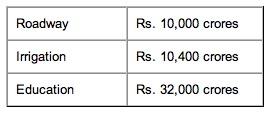
Now I got it. We are losing more to piracy than we are spending on our infrastructure, than what we spend on irrigation and nearly half of what we spend on education. “Aha, but we don’t contribute to this”, I was ready to join the Tarzan family by thumping my chest in a testosterone-soaked moment. “Yes, we do” she quipped. “Remember, we watched the movie ‘Tare zameen per’ by renting it from the video store. That couldn’t be an original one. We watched it in the 1st week of its release”. This got me thinking and I started doing some searches.
Software Piracy
In Asia Pacific region, we have achieved the exalted status of 3rd largest country in software piracy1. In 2006, 71% of all software purchased in India is pirate software. Now, that’s better than 2005 in terms of percentage, but unfortunately, the industry is growing faster than that.
We are all guilty to this at some point in our life. Changing the system date to extend a trial period, buying computers from a distributor who provides it cheaper but doesn’t provide copy of the software loaded, borrowing a software CD from a friend with the ‘Key’, etc are just a few examples.
Music Piracy
Here’s one highly abused industry. Get this – In India, annual loss to the music industry due to piracy is Rs. 650 Crores – Size of the industry Rs. 600 Crores. So, we lose a little over an industry each year.
Piracy occurs due to availability of pirated CDs, copying of CDs and peer-to-peer downloads. My mind was playing a flashback for me – (move that pinwheel slowly anti-clockwise with some eerie music, please) That CD that I bought online of Kannadasan that had 168 songs in 1 CD for $13 couldn’t be original, now could it!
India again takes the honor of 3rd place worldwide in music piracy bowing only to Brazil and China. I am feeling a sense of pride in my country already!
Book Piracy
According to the Federation of book sellers and publishers association of India (FBPAI), a conservative estimate of Rs. 2000 crore is lost by publishers to piracy in a Rs. 7000 crore publishing industry.
That includes you and me buying from the street vendor for 20% of the price that we have to pay from a book store, or reading a book online from pirated sources (similar to Harry Potter books being available on day 2 in India through online servers & sources).
This doesn’t even include the photocopies of books that we take to share with fellow students or family.
Movie Piracy
This is an interesting one. We all have watched a pirated movie or two in our lifetime. We have our own reasons for it – unavailability of original ones, movie not aired in our city, that’s what is available in the store etc. Some of my colleagues and friends are frequent users of desitorrent, IndianPad and Techsatish online.
In India it is estimated that movie piracy basically nullifies theatre revenue after only 3 months, nearly half that of a typical U.S. theatrical window. Imagine the sub-industries that we are destroying by our actions – the popcorn, ice cream sellers, the distributors, the manufacturers, the parking attendants etc – it goes on and on.
Imagine, if I spend half my life in writing a book and I am expecting to save for a rainy day through royalty and I get beaten out of it by piracy – how long will authors be willing to write? “See, why it’s so bad!” quipped my wife. I was woken up from my stupor. “Yes, yes. But I don’t believe my friend Manu watches movies online because he’s trying to cheat the industry” I objected. “We don’t realize how big a problem our actions create”, my wife replied. “That’s why I want inaction. Let’s not watch that pirated movie, let’s not buy that cheap book from the street vendor, let’s not download or copy music without paying for it and let’s not use licensed software that we haven’t paid for”, she finished. “You know me, I am all for inaction”, I told her.
“Now, can you leave the garbage out, dear”, she said as she walked out of the room. I had my excuses all lined up.
References
1 2006 Global Software Piracy Study – IDC Research company – Released May 2007
http://www.pcworld.com/article/id,116842-page,1/article.html
http://missionisi.wordpress.com/2007/10/28/movie-piracy-at-indianpad/
http://www.asiamedia.ucla.edu/article-southasia.asp?parentid=46402
http://www.hinduonnet.com/thehindu/lr/2003/06/01/stories/2003060100490700.htm
http://in.budget.yahoo.com/article.php?page=industry&article=11345905
http://www.bloomberg.com/apps/news?pid=20601091&sid=aqSAruy.miqo&refer=india
http://suryamurthy.wordpress.com/2007/02/28/india-budget-highlights/
http://www.bsa.org/globalstudy

 Entries
