Fine tastings of last week (#3)
Filed in General Interest, October 18, 2006, 7:20 am by Sukumar Tweet1. Priya Raju and I were wondering why humans don’t come in green color, or blue color or other fancy colors like the birds. We noted that human eyes can have some of these colors but not the skin? We decided to investigate. Since our searches on the Net did not turn up anything interesting when we looked for green humans, we decided to see if there are other mammals that are green or blue. Bingo ! We found this great Q&A with the answer provided by Alexey Veraksa. Originally we thought that humans simply didn’t possess the pigments that are needed for blue and green and other colors. But it turns out birds produce these colors not from pigments! read on.
2. I always used to wonder about the relationship between age and genius. Most of the geniuses that we come across are usually young prodigies. David Galenson has done extensive research on this subject and talks about the late bloomers as well. His work is covered in this fantastic article “What kind of genius are you” by Daniel Pink in the Wired magazine.
3. Thanks to an anonymous comment on this blog to Sibu’s review of Freakanomics, I decided to read the book. I should say I quite liked the unusual approach. On the whole I am not able to say it is a great book, but it is definitely worth reading. It also makes for a fast read. For those that have read Malcolm Gladwell’s Tipping Point, Freakonomics gives an entirely different and startling rationale for why crime fell in New York City – abortion laws and the consequent drop in teenage pregnancies! I guess Gladwell couldn’t take this lying down, so Levitt & Gladwell sparred over it –
Gladwell’s opening salvo, Levitt-dubner rebuttal, Gladwell’s counter. Make sure you read all three and enjoy.
Insomnia, Sleep Patterns and Coffee
Filed in Uncategorized, October 12, 2006, 11:39 pm by Sukumar Tweet
Updated Oct 17, 2006: with accurate reference links
As I said before I was down with a viral fever a month and a half back. Since I recovered I started noticing that I was not able to sleep at all. Its a very strange thing because I am the type that starts sleeping almost as soon as I hit the bed. At first, I attributed this to a side effect of the viral fever. .But since the sleeplessness was continuing I had to figure something out Then I remembered something – about 7-8 years ago, myself and Priya Raju made an observation that if we drink coffee after 6PM we couldn’t sleep that night. So 7-8 years ago we stopped having coffee after 6PM. I’m now on the verge of turning 40 and I thought maybe I’m hitting another milestone in ageing effects. So i decided to cut my afternoon coffee. I tried that for a few days but that didn’t seem to have an effect. Last week I was talking to one of my friends and she actually told me she couldn’t have coffee after 11am. I took her advice and for the past 2 days I have stopped having coffee after 11 am and I have made significant progress in my fight against sleeplessness. Now you are beginning to wonder I am sure, as I was, as to what is the connection. We all know that caffeine is a stimulant but for it to have an effect after so many hours is a bit puzzling. For us to understand that we need to understand a bit more about sleep. Sleep is an extremely complex subject and we as humanity don’t yet know a lot about sleep. But we have made some significant progress in our understanding of sleep. There is a particular aspect of sleep that seems to be connected to coffee –
During the day as our body metabolism works its magic to give us the energy it produces an important by-product called adenosine (adenosine if you recall is a key part of Adenosine Triphosphate (ATP) and Adenosine Diphosphate (ADP) which are energy molecules for want of a better term). This adenosine level keeps building up and reaches a certain upper threshold level after which you start sleeping. When you are sleeping an enzyme called adenosine deoxidase deaminase (ADA) goes to work and slowly reduces the adenosine levels and when it reaches its lower threshold level you wake up refreshed. As you can see, these threshold levels are likely to be different for different individuals and may be determining the individual sleep pattern. I say maybe because as I said before sleep is a complex subject and there maybe many more aspects that govern it. Now the connection to coffee – the caffeine in coffee binds to adenosine receptors (which determine the adenosine levels) and fools the brain into thinking that the adenosine levels are still low. That’s why sometimes you maybe feeling tired but cannot sleep because of the effects of coffee. I would love to hear from people as to their experiences with coffee. References:
1. An article in the New Scientist magazine ($$) which described the adenosine aspect I mention above.
India is #79 most corrupt nation and China is #65!
Filed in General Interest, October 4, 2006, 12:22 pm by Sukumar TweetUpdated Oct 5, 2006 – new data from TI.
Raymond Fisman and Edward Miguel, in a Freakanomics style study, for determining the level of corruption in a country have used the number of unpaid NYC parking tickets U.N. diplomats racked up. Their premise is that the diplomats abusing their diplomatic protection are likely to come from countries that are corrupt. Fisman and Miguel also point out another factor that is at play – the degree of unfavorable views that the country holds about the U.S.A. <Via Kottke> Kuwait and Egypt are No.1 and No. 2, Pakistan is No. 10, China is #65, India #79, Sweden and Turkey are at the bottom (least corrupt) as expected.
The study’s results seem to correlate well with the Transparency International’s corruption index.
Why do we reinvent the wheel?
Filed in Uncategorized, , 8:42 am by Sukumar Tweet This is a question that has been nagging me for a long time. Tomes have been written about how reuse is beneficial. Specifically, if you look at software reuse – the benefits are quite obvious – it saves time by piggy backing on other people’s work, the software component is likely to have been tested already saving valuable time, being a reusable component it maybe in better adherence of generally known standards etc. Clearly, it is obvious that reuse is beneficial but hardly anyone
does. First, let us look at reuse from a cost perspective. It can be reduced to a simple equation Cost of reuse = search costs (cost of finding the reusable that is closest to your needs) + adaptation costs (cost of adapting the resuable to your needs). I am sure all of you have come across the situation where plenty of reusable components were available with very low search costs and adaptation costs, but still reuse did not happen. When you inquire why, the standard answer is that it is due to the “Not Invented Here(NIH)” syndrome. The Wikipedia’s reasoning on why NIH syndrome happens:
In many cases, Not Invented Here occurs as a result of simple ignorance, as many companies simply never do the research to know whether a solution already exists. Also common, however, are deliberate cases where the organization’s staff rejects a known solution because they don’t take the time to understand it fully before rejecting it; because they would have to embrace new concepts in infrastructure or terminology; because they believe they can produce a superior product; or because they would not get as much credit for finding an existing solution as inventing a new one.
If you look closely at this, it is covering circumstances where the Search costs are too high (another way of saying ignorance), or Adaptation costs are too high (new concepts, they can produce a superior one). But we have already seen that reuse does not happen even when Search and Adaptation costs are low enough. At this point, i felt that there is probably a neuro-psychological basis for this. If you look at the extract from the Wikipedia above, there is a small clue – “because they would not get as much credit..”. However, that still doesn’t answer the question simply because there are myriad instances of companies actually giving greater recognition and monetary benefits to the reuse-rs as opposed to the creators of the reusables. Even under those circumstances reuse was not happening as much as it was expected to. To get another view on the pyschological aspects, I turned to Margaret Boden’s insightful theory(see p54 in this PDF) of p-creativity and h-creativity:
Psychological creativity – ‘p-creativity’ for short – is in evidence when somebody comes up with an idea that is new to them; they haven’t had that idea before, and they find it very surprising once they’ve had it. Children are doing it all the time, of course, both at home and at school; they’re coming up with ideas they’ve never thought before, but in most cases, they’ve been thought of by literally millions of people before them, so they’re not historically creative. An idea that is ‘hcreative’ is one which is not only new to the person who thinks of it, but as far as we can tell, it’s also the first time in human history that someone has come up with it. So all hcreative ideas are p-creative, but not all p-creative ideas are h-creative.
The question then is, are we neurologically wired to be p-creative (could be looked at as NIH)? I came across a brilliant article on Change Management called the Neuroscience of Leadership by David Rock and Jeffrey Schwartz. I quote 2 small passages from it:
When people solve a problem themselves, the brain releases a rush of neurotransmitters like adrenaline.
…….
…….
For insights to be useful, they need to be generated from within, not given to individuals as conclusions. This is true for several reasons. First, people will experience the adrenaline-like rush of insight only if they go through the process of making connections themselves. The moment of insight is well known to be a positive and energizing experience. This rush of energy may be central to facilitating change: It helps fight against the internal (and external) forces trying to keep change from occurring, including the fear response of the amygdala.
As Boden pointed out as children we are p-creative all the time because that is how we learn. As seen above, the brain rewards you for being creative, p-creative or otherwise, with an adrenaline rush. Since p-creativity is easier, we choose the easy path to neurological rewards. Now, if you go back and look at the reuse equation above, we need to add one more factor – neurological costs. It turns out that for reuse the neurological costs are high because you are going to apply someone else’s solution to a problem you are facing and hence you will not receive some of the rewards. Given the neurological basis of this problem (in many ways similar to Change Management), it is going to be a tough problem to solve. Notes & References:
1. Joel Spolsky has a different take on the subject.
2. I was inspired by Vilayanur Ramachandran’s The Emerging Mind, to investigate the neurological basis for NIH.
3. Image at the top of the post is courtesy leaplaw.com
Fine tastings of last week (#2)
Filed in Food,General Interest, October 3, 2006, 1:11 pm by Sukumar TweetIn scotland, a novel experiment starts – issuing lollipops to curb rowdy behavior of people under the influence. The Blu Ray Vs. HD-DVD debate rages on with no end in sight. The IEEE Spectrum weighs in with an article that seems to lean on the Blu Ray side. What do you all think?
One never associates plants and the sense of smell, at least I didn’t. Well, the dodder plant (Cuscuta) changes that – it actually smells.
I strongly believe in the Hygiene Hypothesis and I think distraction could be a useful tactic. I had hypothesized earlier that the Hyderabad Fish Cure is a distraction tactic. Now a Swiss company has invented a drug that fools the body to think that its being attacked by bacteria and helps control asthma attacks.
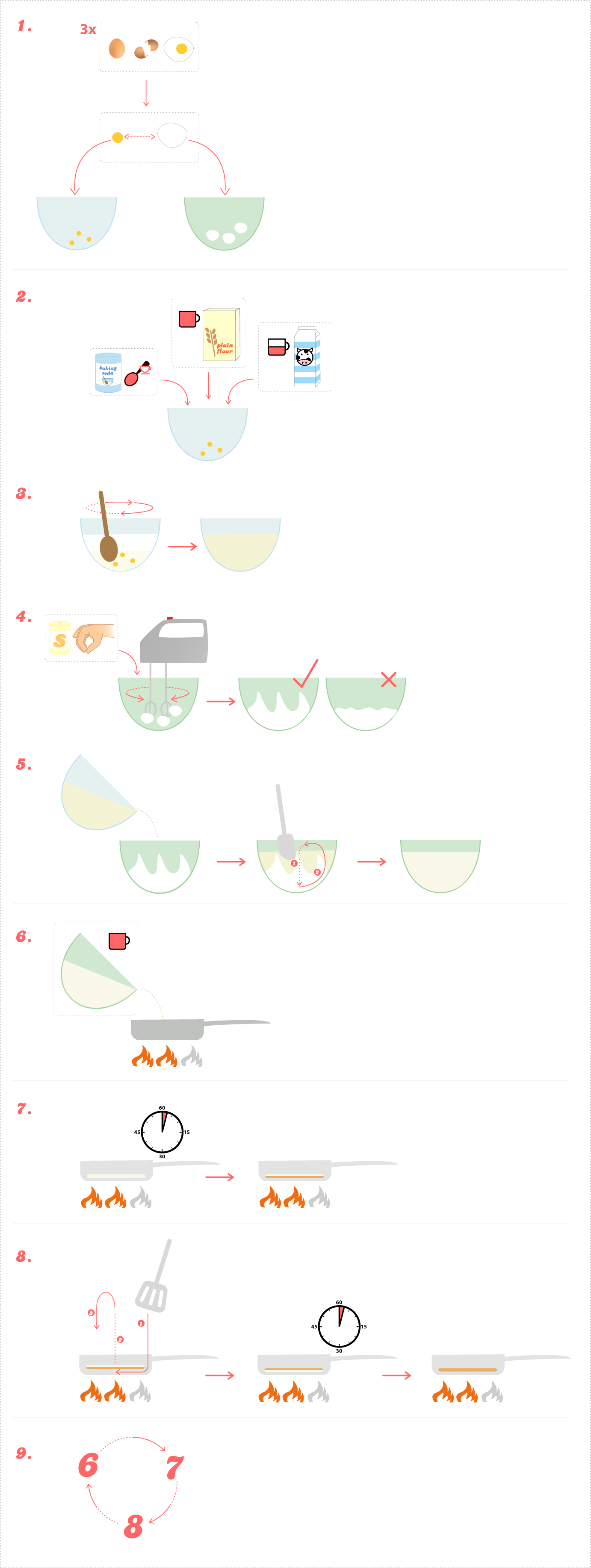
I am sure you will agree with me that writing a recipe for making pancakes is quite tough. What if I told you that someone created a pancake recipe entirely with pictures!
Didn’t know that the first ever sexual harassment class action lawsuit in the USA was filed as late as 1988. Came to know about this through the movie North Country – has some excellent performances by Charlize Theron and Woody Harrelson.

 Entries